The Electrician’s Guide to Preventing Appliance Damage from Power Surges
Are your appliances safe from the next power surge? It only takes a millisecond—one unexpected spike, and your electronics could end up fried. That’s not just an inconvenience. It’s money out of your pocket, and sometimes, damage you can’t easily see until it’s too late.
At LintPro Electric, we hear the stories every week. A sudden storm, a lightning strike, or a utility hiccup, and suddenly a fridge or office server is toast. Knowing how to guard against surges is as important as locking your doors at night.
How Do Power Surges Damage Appliances and Electronics?
Think of a power surge like a tidal wave hitting a sandcastle. Electricity, usually flowing at a calm and steady pace, suddenly surges forward with force. This burst can:
- Burn out sensitive microchips in TVs and computers
- Weld together tiny contacts inside appliances
- Corrupt data on hard drives
- Melt wiring insulation, increasing fire risk
- Cause subtle, repeated wear that slowly weakens expensive devices
Sometimes, the damage is instant. Other times, it’s like slow water damage inside a wall—hidden until things go wrong.
The Limits of Plug-In Surge Protectors
Those power strips with “surge protection” labels? They work, but only up to a point. Imagine them like umbrellas in a thunderstorm. They’ll keep you dry from a drizzle, but not from a downpour.
- Most plug-in models only defend what’s plugged directly into them
- Even the best strips can’t block the strongest surges, like those from a nearby lightning strike
- They wear out over time and often give no warning before failing
- They do nothing to protect hardwired appliances—think fridges, dishwashers, HVAC units
For full protection, you need a whole-house or whole-building solution—think of it as a raincoat for your entire electrical system.
Whole-House Surge Protection: The Gold Standard 🏠
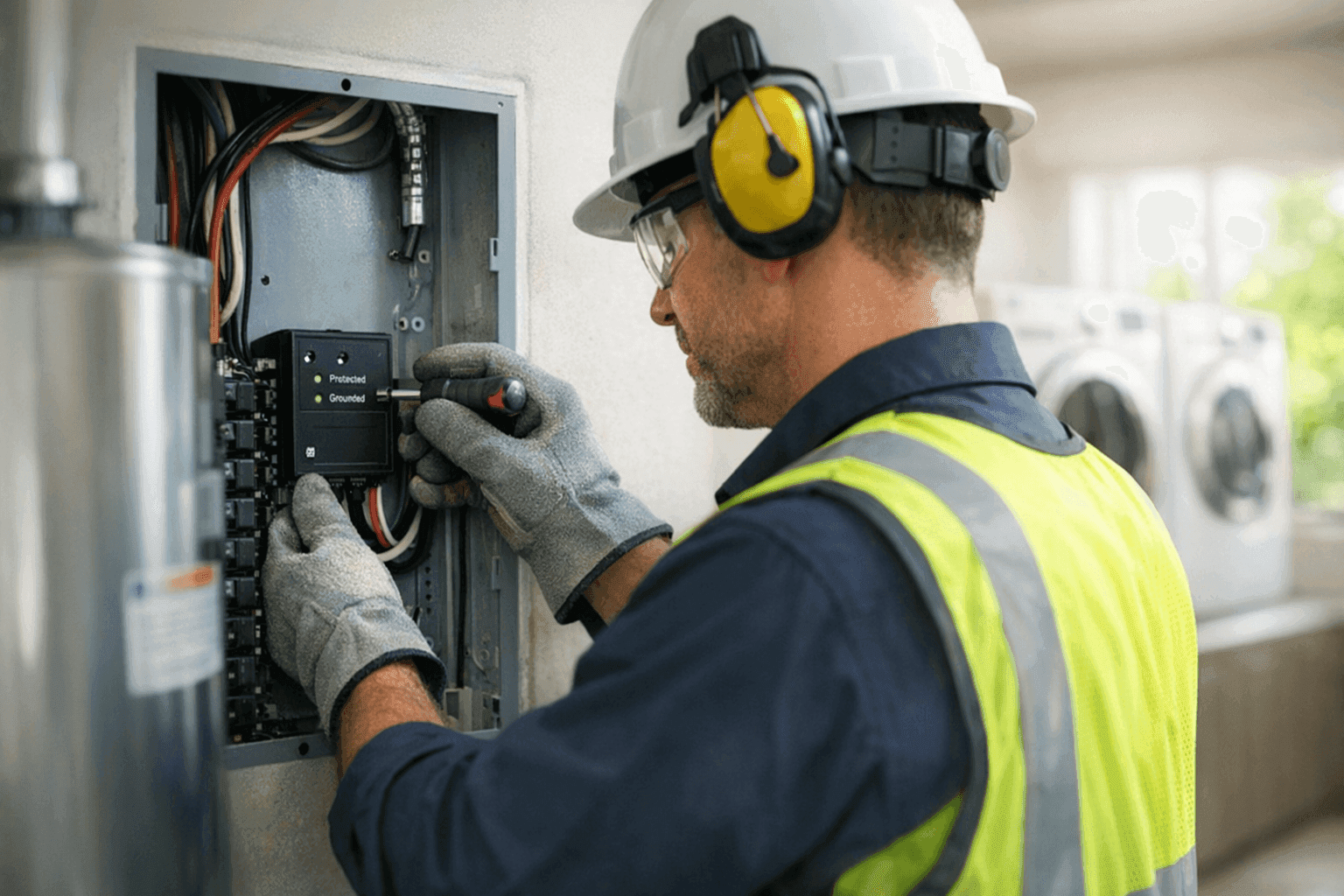
Whole-house surge protectors are installed right at your electrical panel. They act like bodyguards, intercepting excess voltage before it reaches your outlets or appliances.
Benefits include:
- Defending all circuits—protecting everything from your computer to your washing machine
- Blocking both external surges (like lightning or grid fluctuations) and internal ones (caused by large appliances cycling on and off)
- Lasting protection you don’t have to constantly monitor
Plus, a certified electrician can size the protection to your unique home or business, offering peace of mind that a plug-in strip simply can’t match.
Step-by-Step: How Surge Protection Installation Works
Curious how the process unfolds? Here’s what to expect from a professional installation:
- Assessment: Your electrician evaluates your existing panel, appliances, and risk factors.
- Product Selection: Only certified, code-compliant surge protectors are chosen (UL 1449 listed).
- Panel Work: Power is safely shut off; the surge protector is wired directly into your main panel or sub-panel.
- Testing: The system is powered up and checked for correct operation.
- Documentation: You receive records for insurance and warranty purposes.
LintPro Electric’s team handles all work to National Electrical Code (NEC) standards, so you’re protected by both skill and the law.
DIY or Call a Pro? Why This Job Isn’t for Amateurs
Surge protection devices work at the heart of your electrical system. This isn’t a job for YouTube tutorials. Working inside a breaker panel can be dangerous—even fatal—if you don’t have the right training and tools.
Only a licensed electrician should:
- Assess your exact needs (residential vs. commercial, size of service, etc.)
- Ensure code compliance
- Provide warranty-backed installation
DIY shortcuts can leave costly gaps in your protection. For true peace of mind, leave it to certified surge specialists.
Quick Safety Checklist: Are You at Risk?
Not sure if you need surge protection? Ask yourself:
- Do you live in an area with frequent storms or power outages?
- Have you recently upgraded major appliances or electronics?
- Do you own a pool, spa, or home automation system?
- Is your electrical panel more than 10 years old?
- Have you ever noticed flickering lights, tripped breakers, or unexplained device failures?
If you answered yes to any of these, it’s time to talk to an electrician about Surge Protection.
Maintenance Matters: Keeping Your Protection Strong
Think of your surge protector like a seatbelt. It only works if it’s in good shape. Here’s how to make sure you’re always protected:
- Schedule annual safety inspections with a certified electrician
- Look for indicator lights—many whole-house units have LEDs that show status
- Replace units after any major surge event or according to manufacturer recommendations
- Keep documentation for warranty support
Regular checkups mean you’re never unknowingly left exposed.
When to Upgrade Your Surge Protection
Sometimes, the best defense is a new offense. Upgrade your surge protection if:
- Your current device is older than 5–7 years
- You’ve added major appliances or electronics
- Your home or business has undergone electrical work or renovations
- Manufacturer or electrician recommends replacement due to wear
Modern surge protectors offer better technology, often with remote monitoring and longer service life.
Why Appliance and Electronics Protection Is Worth It
It’s not just about preventing inconvenience. Surges can destroy:
- Refrigerators, ovens, and washers—costing hundreds to thousands to replace
- Smart home devices and security systems
- Office computers, servers, and networking gear
- Pool and spa pumps or controls
A small investment in surge protection can save you from the headache and cost of replacing vital equipment.
Certified Surge Specialists: What Sets LintPro Electric Apart
Choosing LintPro Electric means choosing a team with:
- Certified, licensed electricians trained in Surge Protection
- Proven experience with both residential and commercial surge solutions
- Full documentation for insurance and warranty claims
- Ongoing support for maintenance, upgrades, and emergency service
We don’t just install and walk away. We stand by our work and help you protect the things that matter most.
Common Mistakes to Avoid
Even well-meaning property owners sometimes make risky mistakes:
- Relying only on plug-in strips for whole-home protection
- Ignoring warning lights or skipping annual checks
- Installing “bargain” surge protectors not listed or certified
- Waiting until after a surge event to take action
Don’t wait for a disaster. Prevention always costs less than repair.
Timeline and Disruption: What to Expect
Worried about downtime? Most whole-house surge protector installations take under two hours. Power may be off briefly, but skilled electricians keep disruption to a minimum. You’ll be back to normal—just safer—by the end of the day.
Codes and Standards: What the Experts Say
The National Electrical Code (NEC) now requires surge protection for new homes and major remodels. Insurance providers increasingly expect documented protection for coverage of appliances and electronics. Always insist on certified, code-compliant installation.
FAQ: Your Surge Protection Questions Answered
Q: Will a surge protector stop every surge?
A: No system is 100%, but a professionally installed protector stops the vast majority of damaging surges.
Q: Do I need protection for my business, too?
A: Absolutely—commercial systems often have even more at stake. Commercial Services are available for offices, shops, and more.
Q: Is maintenance hard?
A: Not at all. Annual checkups and a quick glance at indicator lights are usually all it takes.
Ready to Protect Your Investment?
Your appliances, electronics, and peace of mind are worth defending. Don’t let a power surge put them at risk.
Call LintPro Electric now — or reach us anytime at 844-484-8656 .